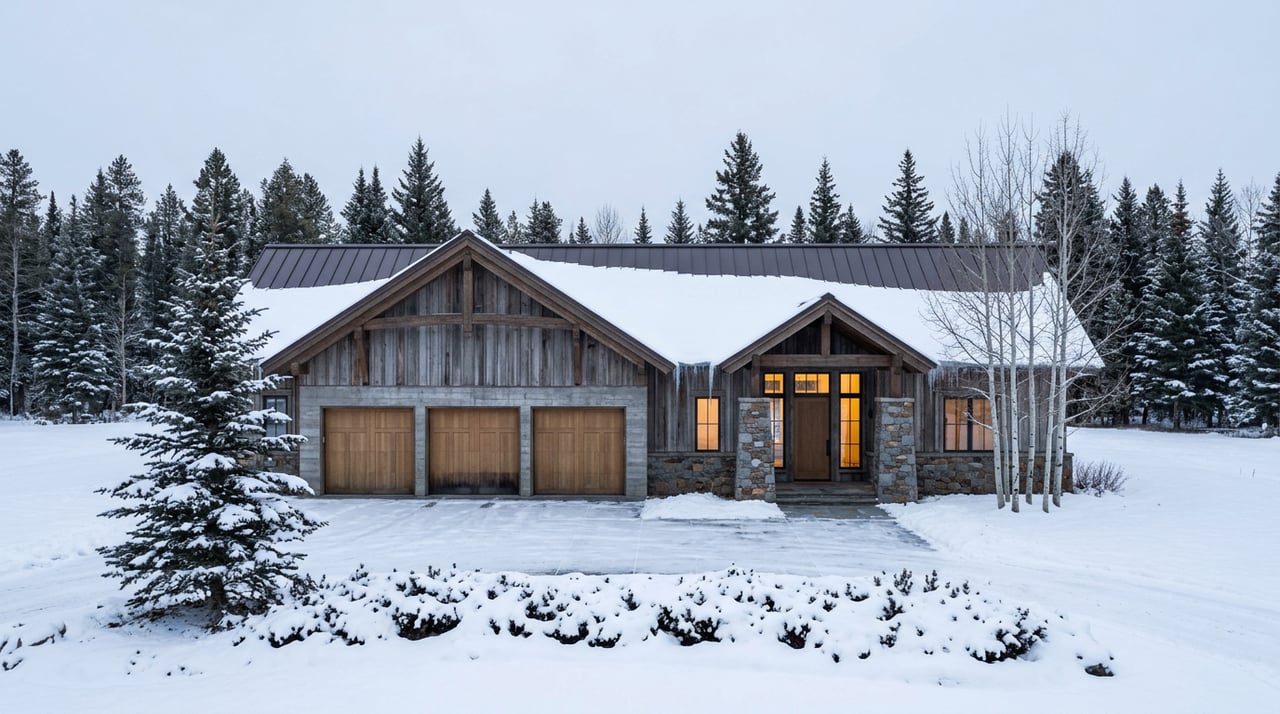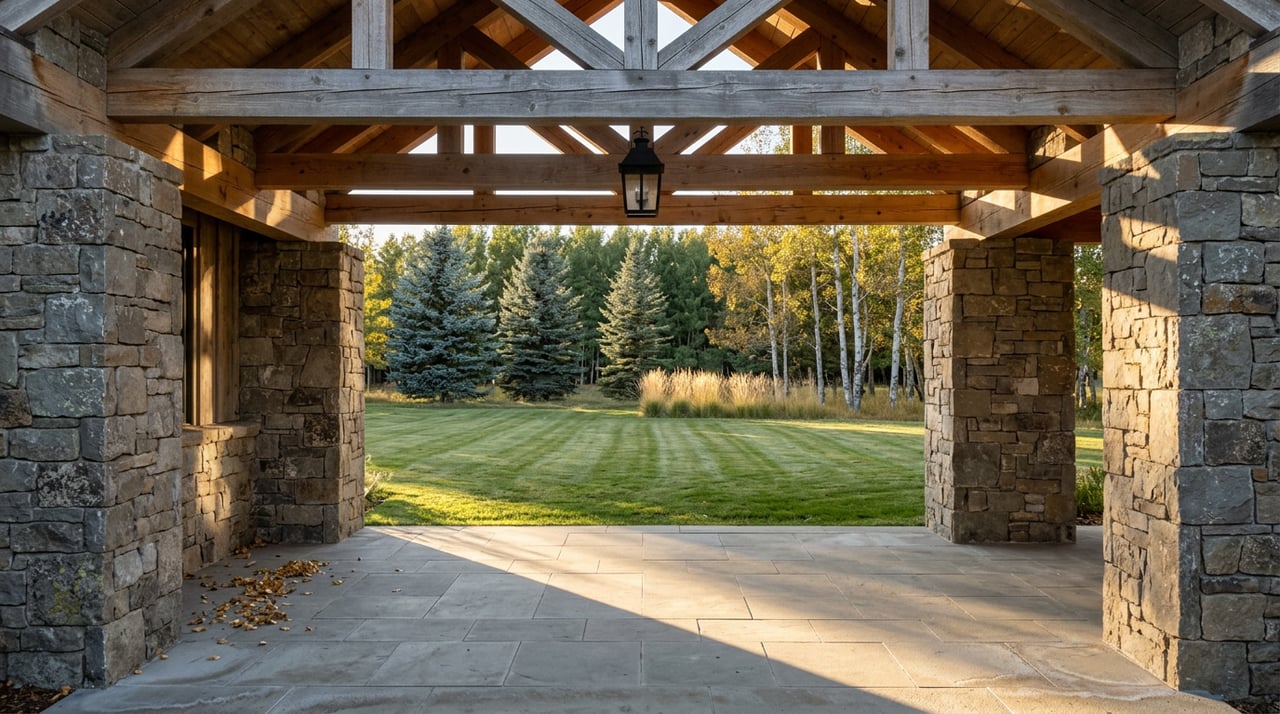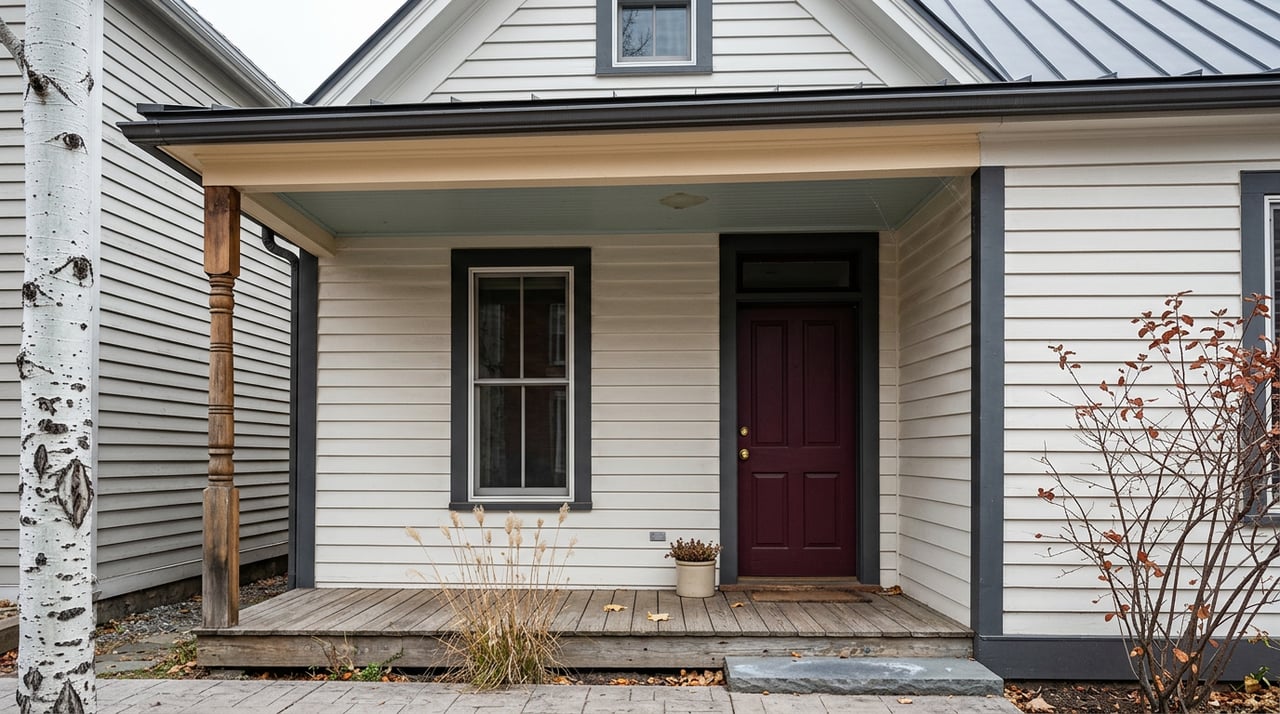
Two miner's cottages sit a block apart on the same Old Town street. Same asking price, same lot width, same tired paint. One will let a buyer add a primary suite, a two-car tuck-under, and a rear deck inside eighteen months. The other will absorb a year of design review, a demolition-review petition, and a rebuild that has to keep the front wall where it stands. Nothing on the MLS card tells you which is which. The Historic District Design Review process does, and it is the single largest hidden variable in an Old Town transaction.
The thesis is simple. In Old Town, list price divided by square footage is the wrong denominator. The right one is approvable square footage under the current Land Management Code and the 2019 Design Guidelines, and the gap between the two numbers is where buyers overpay or quietly win.
The gate every Old Town project passes through
Any exterior work in Old Town's historic zoning districts goes through Historic District Design Review before a building permit is issued. The scope is broader than most out-of-area buyers expect. The Planning Department reviews and approves, approves with conditions, or denies all HDDR applications involving any use associated with a building permit to build, locate, construct, remodel, alter, or modify any building, accessory building, or structure, or site located within the Park City Historic Districts or Historic Sites, including fences and driveways.
Fences. Driveways. A new front porch railing. The trigger is not "major renovation." The trigger is "exterior."
Applications are measured against three overlapping bodies of rule: Architectural Review Chapter 15-5, Historic Preservation Chapter 15-11, and the Design Guidelines for Historic Districts and Historic Sites Chapter 15-13. When those documents disagree, the more restrictive language controls. That single sentence in the code is why experienced Old Town architects quote longer timelines than their Deer Valley counterparts for projects of the same square footage.
Is the house on the Inventory? The question that reprices the lot
Park City keeps a Historic Sites Inventory. The current list includes nearly 400 properties and was adopted by resolution of the Historic Preservation Board on October 1, 2007. These properties substantially comply with the criteria listed in the Land Management Code for designation as Historically Significant. Historically Significant buildings have a unique ability to convey the history of Park City. Owners of Historically Significant buildings may not demolish buildings without first going through a rigorous demolition permit approval process.
That is the sentence that separates the two cottages in the opening. If the existing structure is on the Inventory, a buyer is not purchasing a lot. They are purchasing a lot plus a preservation obligation. The demolition path exists, but it is neither fast nor guaranteed, and it runs through Material Deconstruction review at the Historic Preservation Board before any dozer arrives.
Two national-register overlays add context to which streets carry the heaviest weight. The Main Street Historic District, listed in the National Register in 1979, comprises ninety-five properties between 3rd Street and Heber Avenue, located primarily along Main Street. The Mining Boom Era Residences Thematic District, listed in 1984, includes seventy residential properties throughout Park City built during the mining boom period (1872-1929) that were found to be both architecturally and historically significant. A property on either list is not just old. It is federally recognized as significant, and that recognition informs how the Planning Department reads any application to alter it.
The practical translation for a buyer's offer: before writing a number, pull the address against the Historic Sites Inventory and confirm whether the primary structure is Significant, Landmark, or non-historic. The answer changes the ceiling on what can be built.
The calendar is the risk, not the fee
The friction most buyers underprice is time. HDDR is not a rubber stamp, and the clock has teeth.
| Phase | What it involves | Buyer's exposure |
|---|---|---|
| Pre-application conference | Voluntary but strongly recommended sit-down with Planning and Building | Scoping errors here surface at public comment instead |
| Physical Conditions Report | Required documentation of the site's existing character-defining features | Ordered before Pre-App if the site is historic |
| Application and certification | Formal submittal against Chapters 15-5, 15-11, 15-13 | Redlines are common on first pass |
| Public comment period | Neighbors and preservation advocates weigh in | Where cost-driven material choices tend to get challenged |
| Final Action | Approval, conditional approval, or denial | The clock starts here |
| Building permit | Separate review after HDDR is final | Must be pulled inside the HDDR window |
The clock matters because unless otherwise indicated, Historic District Design Review approvals expire one year from the date of the Final Action. The Planning Director or designee may grant an extension of an HDDR approval for one additional year when the applicant is able to demonstrate no change in circumstance that would result in an unmitigated impact or that would result in a finding of non-compliance with the Park City General Plan or the Land Management Code in effect at the time of the extension request.
Read that carefully. If the code changes between Final Action and the extension request, the extension can be denied. A buyer who closes in the fall, hires an architect over the winter, and does not have a permit-ready set by the following autumn is exposed to whatever the city adopts in the interim. The 2019 Guidelines update is a recent reminder that the rules do move.
The Physical Conditions Report is the piece most first-time Old Town buyers do not price in. All sites, historic or otherwise, that are subject to a Historic District Design Review application are required to complete a Physical Conditions Report. This form may be completed and submitted to the Planning Department prior to your Pre-Application Conference. Add a preservation consultant to the pro forma if the site is on the Inventory.
Materials that quietly kill budgets
The Guidelines do not just shape massing. They shape the finish schedule. Two categories worth flagging on any Old Town rehab budget:
- Synthetic stone products. The code specifically bars synthetic stone products such as simulated stone or brick, cultured stone or brick, pre-cast stone or concrete imbedded with stone fragments from use as siding. Cultured-stone veneers that pencil beautifully in a Salt Lake spec home are not on the table here.
- Untreated metal and vinyl windows. Untreated aluminum, untreated metal, vinyl, and other similar window frames are generally not considered appropriate in the Historic Districts. The Planning Director may, however, consider requests for the use of these materials. The applicant will be required to bring a sample of the type and color of the material to be approved by the Planning Director. A window package priced against a Wasatch Back production builder is almost never the package that will get approved.
The rehabilitation carrot balances the regulatory stick. Owners investing in exterior work that meets the Guidelines can apply for matching funds through the Historic District Grant Program, which is worth pricing into any renovation model for a Significant or Landmark property.
The non-complying footprint is often the asset
Buyers see setback and height nonconformities as problems. On a historic Old Town lot, they are often the reason the property is worth what it is.
Significant and Landmark Historic Sites that exceed the maximum lot area, and Historic Buildings and/or Structures that do not comply with Building Footprint, Building Height, Building Setbacks, Off-Street parking, and driveway location standards are valid Non-Complying Structures. Additions must comply with Building Setbacks, Building Footprint, driveway location standards and Building Height. Additions to Historic Buildings and/or Structures are exempt from Off-Street parking requirements provided the addition does not create a Lockout Unit or Accessory Apartment.
Two things follow. First, the existing envelope stays even if it would not be legal to rebuild today. Second, an addition that would otherwise trigger a new parking requirement can escape that requirement as long as the design does not carve out a lockout or accessory apartment. On a lot where fitting a second parking space is physically impossible, that exemption is the difference between a feasible project and a stuck one. It is also the reason certain STR-oriented floor plans do not pencil in this district: the moment the design reads as a lockout, the parking obligation returns.
Lower Rossi Hill and the STR pro forma
Buyers modeling nightly rental income should read the sub-neighborhood language carefully. Nightly Rentals in the Lower Rossi Hill sub-neighborhood require a Conditional Use Permit. For Nightly Rentals in the western sub-neighborhood, in addition to the Conditional Use Permit criteria, the Planning Commission shall consider whether or not the proposed Nightly Rental mitigates the impacts of and addresses the following items: all rental agreements for Nightly Rental shall include language that limits the vehicles allowed to the number of on-site Parking Spaces; all rental agreements shall include language indicating that all-wheel drive vehicles are required during the winter season; all rental agreements shall provide Nightly Renters with information regarding walkable access to skiing, to Park City's Historic Main Street, to Old Town, and to Park City's free transit service; and property management contact information shall be displayed in a prominent location inside the Nightly Rental.
A Lower Rossi Hill purchase priced on assumed nightly rental income without a CUP in hand is a leveraged bet on a discretionary approval. That belongs in the diligence period, not after closing.
How this reprices an Old Town offer
A short sequencing checklist worth running before you sign:
- Pull the address against the Historic Sites Inventory. Confirm Significant, Landmark, or non-historic status in writing.
- If Significant or Landmark, price a Physical Conditions Report and a preservation consultant into diligence, not construction.
- Model two build timelines: HDDR plus building permit inside twelve months, and the same plus an extension request. Assume the extension is not guaranteed.
- Strip cultured stone, vinyl windows, and any lockout-unit floor plan out of the pro forma before the appraisal comes back.
- In Lower Rossi Hill, treat STR income as conditional on a CUP, and structure the offer accordingly.
FAQ
Does HDDR apply to interior remodels? The review is triggered by exterior alterations and by any work associated with a building permit that affects the exterior envelope. Purely interior finishes that do not touch windows, doors, roofline, or footprint typically fall outside HDDR, though a pre-application conversation with Planning is the correct first step on any historic site.
Can a Historically Significant building ever be demolished? Yes, but only through a rigorous demolition permit approval process and, where triggered, Historic Preservation Board review for Material Deconstruction. Assume months, not weeks, and assume the outcome is not certain.
What changed in 2019? The city completed a full update to the Historic District Design Guidelines. The 2019 document is the operative framework governing current applications, and it tightened several preservation-oriented provisions relative to earlier versions.
Are there any incentives that offset the process cost? The Historic District Grant Program offers matching funds for qualifying exterior work on historic properties. It does not eliminate the timeline, but it can meaningfully improve the net cost of a compliant rehabilitation.
Old Town rewards buyers who read the code before they read the comps. If you are weighing a purchase here and want a candid read on what a specific address will let you build, Tara Vaught is glad to walk the lot with you. Let's Connect.